

The dangers lurking on the internet are many and the temptation to forbid our children any contact with it is great. This is not a solution, of course, but we can – by following the tips below – help our children use the internet without being at risk.
- Do not forbid your children from browsing the internet on the home computer. After all, they can access it from friends' computers, internet cafés, even from their school. It is better to try to make browsing the internet a family activity, so that a relationship of trust develops between children and parents.
- Do not forget mobile phones, tablets and PlayStation. These devices now work like small computers, so their use must be supervised too. There is no point in being strict about computer use while letting our children use the phone and the tablet freely.
- Place the computer in a shared space of the home (e.g. the living room). Do not allow devices to be used in the child's bedroom, in the bathroom and in general in places where the parent does not have direct access.
- Ask your children to explain a few things to you and let them show you what they can do on the internet and let them visit their favorite pages.
- It is essential for parents themselves to gain basic knowledge and to learn about the use of the internet, its benefits and its dangers. Put emphasis on discovering websites with informative, educational, entertaining content and activities appropriate to your child's age.
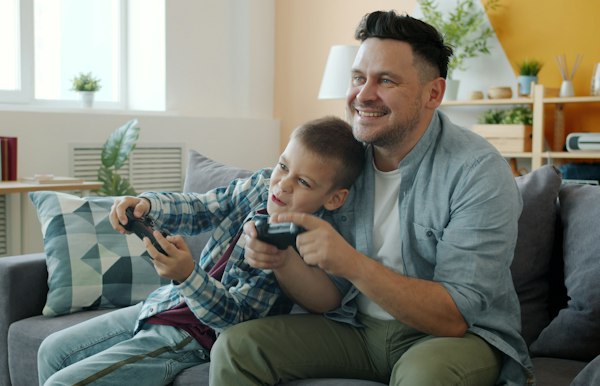
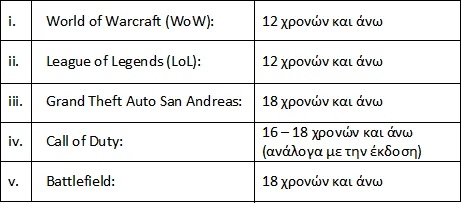
- Let children play video games. "gaming is health". But set limits on the choice of games and the permitted time spent. Try to find out the age limit above which a child is allowed to play each game.

Indicative age limits for some of the most popular games on the market
- Use parental-control filtering programs, which block connection to dangerous websites while also recording the computer's internet traffic.
- In general, internet use should not exceed 1 hour per day for children up to 5 years old, 1,5 hour per day for children up to 12 years old and 2 hours per day for older children (and for the parents themselves too).

Children's safety on internet is the parent's responsibility
In particular, advise your children:
- Not to give anyone their internet password. The only people who should know the password are the parents. Internet accounts should be in the children's names, respecting the age limits of websites.

Indicative age limits for some of the most popular websites and apps
- To use appropriate usernames.
- To create and use strong passwords.
- Not to share personal information and not to meet anyone in person without your consent. If you agree to let your child meet someone they met online, first talk to the other person's parents / guardians and accompany your children yourselves to the meeting in a public place.
- To think about whether a message is rude, dangerous or may bother or hurt someone before they publish or send it.
- Not to reply to messages or comments with suspicious content or an unknown sender, or to electronic messages that are rude or annoying, that make them feel scared, uncomfortable or confused. If they receive such a message, they should not hesitate to tell you.
- To close the connection to internet and the computer itself if they see something that frightens, worries or confuses them.
In case of any suspicious incident, do not hesitate to contact the Cybercrime Units. They are staffed with experienced and trained personnel, with great sensitivity to child safety issues.

internet is a parallel electronic world in which children are called to live today and in which they will face dangers corresponding to those that threaten them in the real world: fraud, theft, bullying (bullying), addiction, dangerous or inappropriate content.
Every parent's goal should be to first become familiar with the world of internet themselves and then teach their children to survive in it.